
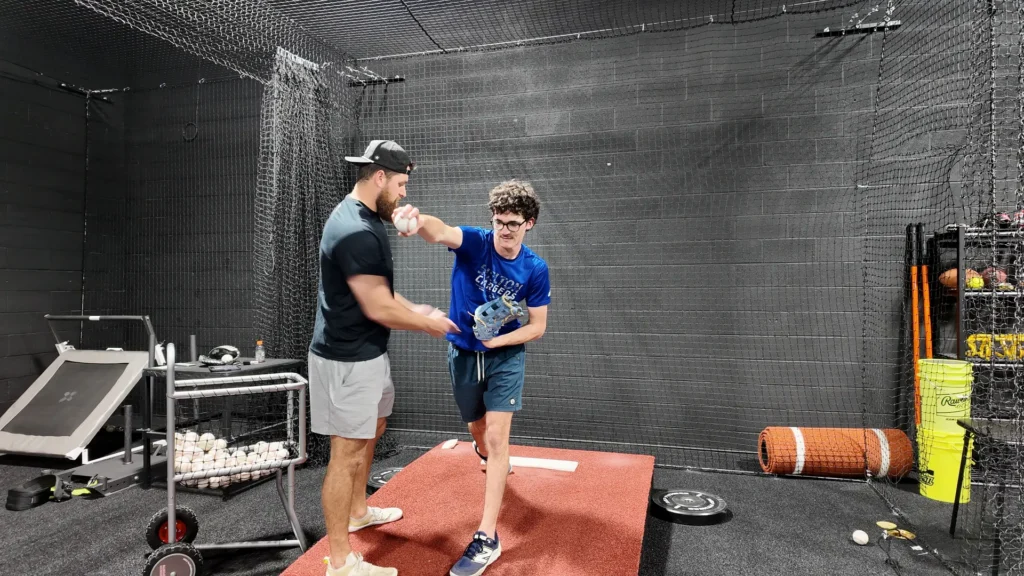
Baseball looks like a skill sport. And it is. But underneath every hard-hit ball, every stolen base, and every diving stop is an athlete who built the physical foundation to make those plays possible. Strength and agility aren’t add-ons to baseball training. They’re what skill sits on top of.
A player with clean swing mechanics but no lower-body power will cap out on exit velocity no matter how many cage reps they take. A pitcher with a sharp breaking ball but poor core stability will lose command as the game goes on. The physical side of the game determines how far the skill side can go. For Dallas-area players serious about advancing, ignoring it isn’t an option.
At Lone Star Diamond Academy, strength and agility development are built into the program from day one. Here’s why they matter and what that training looks like at a baseball training academy in Dallas built for complete athlete development.
Why Physical Development Gets Overlooked in Youth Baseball
Most youth baseball instruction focuses on mechanics. Swing path, arm action, footwork, pitch shape. All of it matters. But there’s a reason a 17-year-old can have better mechanics than a 15-year-old and still get overpowered on the field. Physical development is the variable that often goes unaddressed.
Part of the reason is that skill work is visible and immediately satisfying. A player makes an adjustment on a swing and sees the ball fly differently. The payoff from a strength program takes longer to show up and is harder to connect directly to performance. So families invest in lessons and skip the conditioning. The gap shows up later, usually when a player stops advancing, and nobody is sure why.
The other factor is that not every Dallas facility is equipped to address both. Hitting and pitching instruction is common. A structured athletic development program that integrates with skill training is harder to find. That’s a meaningful difference between a cage rental and a real baseball training academy in Dallas.
Strength Training: Building the Foundation
Strength in baseball isn’t about being the biggest player on the field. It’s about generating power efficiently and staying healthy through a long season. Those are two different goals than general fitness, and they require a program built around baseball-specific demands.
For young players, the foundation starts with bodyweight control and movement quality. Before adding resistance, athletes need to demonstrate proper mechanics in fundamental patterns: squats, hinges, pushes, and pulls. Players who skip that foundation and jump to heavy lifting often develop compensations that create injury risk down the road.
At LSDA, strength and pitching specialist Chris Muller oversees the physical development side of the program. His background spans both strength training and pitching, which means he understands how physical development connects directly to on-field performance. A pitcher who builds posterior shoulder strength reduces injury risk and maintains velocity deeper into games. A hitter who develops rotational power through the core and hips produces more bat speed without changing their swing mechanics at all.
Lower body strength is where a lot of that power originates. Explosive leg drive is what separates soft contact from hard contact for hitters and what generates velocity for pitchers before the arm ever gets involved. Building that base takes consistent, progressive work over months, not a few sessions before the season starts.
Speed and Agility: What Separates Good Athletes from Great Ones
Speed in baseball isn’t just about running fast in a straight line. Straight-line speed matters for beating out grounders and tracking fly balls. But agility, the ability to accelerate, decelerate, and change direction with control, is what separates average defenders from standout ones.
A shortstop who can read a ground ball, break laterally in two steps, field cleanly, and throw across the diamond in one fluid motion is doing something athletic, not just mechanical. That play requires explosive first-step reaction, lateral quickness, body control through the catch, and enough arm strength to finish it. Every part of that sequence is trainable.
At LSDA, speed and agility coach Casey Mayes works with players specifically on those athletic qualities. Sprint mechanics, reaction time, lateral movement, and change-of-direction efficiency are all addressed with drills built around what the game actually asks of players. The goal isn’t to produce fast athletes in a vacuum. It’s to produce fast baseball players who can use their athleticism when it counts.
How Physical Development Connects to the Data
One of the advantages of training at LSDA is that physical development doesn’t happen in a separate silo from skill training. The data from HitTrax baseball training and Rapsodo baseball training connects directly to what the strength and agility program is trying to build.
A hitter whose exit velocity plateaus despite good swing mechanics might be limited by rotational power, not technique. That shows up in the HitTrax numbers and points the development plan toward physical work rather than more cage time. A pitcher whose velocity drops late in outings might be losing stability through the core and lower half as fatigue sets in. Rapsodo data can show that velocity trend, and Chris Muller’s program can address the physical cause.
That integration between technology and physical training is something most Dallas facilities don’t offer. Skill coaches and strength coaches often operate independently, with no shared data connecting what they’re each working on. At LSDA, those programs talk to each other. The result is a development plan where every piece is pointed at the same target.
Build Winning Speed and Agility For Baseball with LSDA
Skill development and physical development aren’t two separate conversations in baseball. They’re the same conversation. A player who trains one without the other is leaving performance on the table and increasing their injury risk at the same time.
For DFW baseball families looking for a baseball academy near me that takes the full athletic picture seriously, Lone Star Diamond Academy builds strength, speed, and agility into every development plan alongside skill instruction and performance technology. Explore our membership options to see how we develop complete athletes from the ground up.