
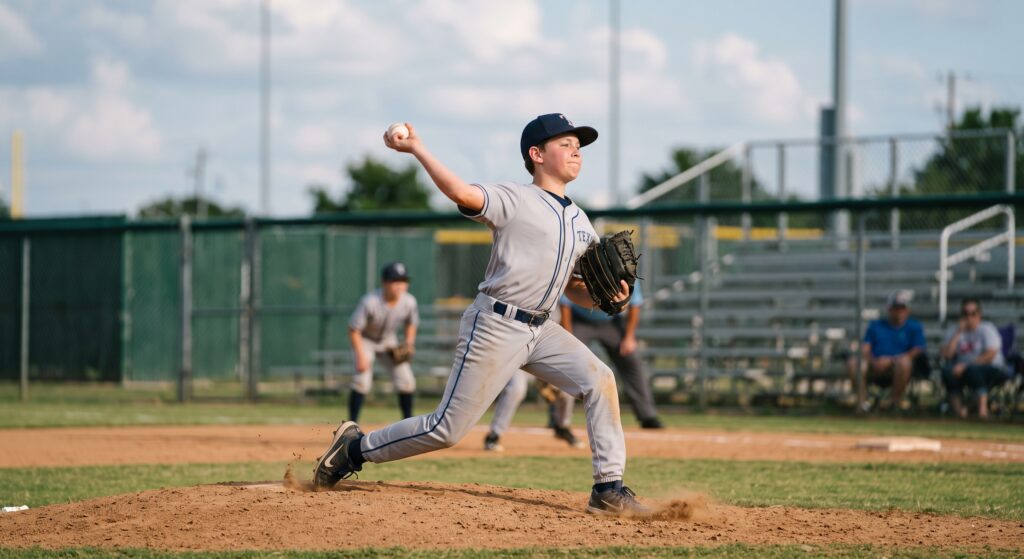
A pitcher’s mechanics tell the whole story. Good mechanics produce velocity, command, and a long, healthy career on the mound. Bad mechanics produce walks, hittable pitches, and, often, arm injuries that sideline a player for months. The tricky part is that most mechanical flaws don’t look dramatic. They’re small breakdowns in timing and sequence that compound over hundreds of pitches.
The earlier these flaws get caught, the easier they are to fix. A habit that’s been reinforced for three years is a lot harder to change than one caught in its first season. At Lone Star Diamond Academy, coaches use Rapsodo baseball training to spot these issues early and build a plan to correct them before they turn into bigger problems. Here are the most common mechanical mistakes we’ve seen youth pitchers make and what tends to cause them.
A Short Stride Limits Everything Downstream
Stride length affects nearly every part of a pitching delivery. A stride that’s too short throws off balance, reduces velocity, and changes the release point in ways that hurt both command and arm health.
The general target for stride length is 85 to 100 percent of a pitcher’s height. That’s a demanding standard for a young player who may not yet have the strength or athleticism to support a stride that long. But a short stride creates its own problems. Without enough forward momentum, a pitcher can’t generate the power needed to drive through the delivery efficiently. The body ends up compensating somewhere else, usually the arm, which takes on stress it shouldn’t have to handle alone.
Building a longer, more supported stride takes deliberate practice and physical development together. Strength and pitching specialist Chris Muller works with pitchers at LSDA on the physical foundation, lower body strength and stability in particular, that lets a longer stride actually hold up under the demands of a full delivery.
Poor Hand Separation Adding Unnecessary Stress
How a pitcher takes the ball out of the glove sets the tone for the rest of the delivery. A common mistake among young pitchers is separating the hands with fingers behind the ball and the thumb pointed up. That grip pushes the baseball rather than throwing it, which reduces power and adds strain to the arm.
The correct pattern has the fingers on top of the ball with the thumb pointed down as the hands separate, raising the ball up and away from the target before pulling it forward into throwing position. This small adjustment changes the entire arm path and reduces the mechanical stress that builds up over a season of pitches.
Coaches catch this quickly through video review, but Rapsodo baseball training adds another layer by tracking release point consistency. A pitcher whose release point varies pitch to pitch often has an inconsistency further back in the delivery, and hand separation is one of the first places to look for issues in pitching lessons.
Not Getting the Arm Up in Time
When the front foot lands, the throwing arm needs to be in position. At that moment, the elbow should be at shoulder height with the arm bent and the ball positioned up behind the head. A pitcher whose arm is still low when the front foot lands is behind in the delivery, and that timing gap tends to produce elevated pitches and reduced velocity.
This flaw often traces back to the front foot landing too early, either from rushing the delivery or from a stride that’s too short in the first place. That’s why these mechanical flaws rarely exist in isolation. One breakdown early in the delivery creates a chain reaction that shows up somewhere else.
The Front Side Flying Open
At release, a pitcher’s chest and chin should be driving toward the target, with the lead arm pulled in close to the body rather than flying open. When the glove and elbow drift too far away from the body, the pitcher’s momentum shifts off line, and pitches tend to miss wide of the target.
Keeping the front side tight and controlled quickens the rotation through the lower half and helps direct the pitch where it needs to go. This is a timing and body control issue more than a strength issue, which means it responds well to focused mechanical work and video feedback showing exactly where the front side is breaking down.
Leading With the Foot Instead of the Body
When a pitcher’s weight and momentum are properly directed down the mound, the body leads the way and the energy transfers efficiently into hip rotation. A common mistake is letting the front foot get ahead of the rest of the body during the stride. When that happens, there isn’t enough body momentum behind the foot to generate real power, and the delivery loses efficiency right at the point where it should be building speed.
Rocking Back and Losing Balance
Balance throughout the delivery is what keeps a pitch on target. When the knee lifts during the leg raise, the pitcher needs to stay balanced with the head positioned over the back foot. A frequent flaw among young pitchers is letting the shoulders rock back toward first or third base during that leg lift, which throws the stride off line and sends pitches wide of the target.
Staying upright with the chin tucked over the belt through this phase keeps the delivery balanced and repeatable. This is one of the flaws that shows up clearly in Rapsodo’s release point and command data, since inconsistent balance tends to produce inconsistent locations pitch to pitch.
Skipping the Follow Through
A complete follow-through matters as much for arm health as it does for control. Pitchers should finish with the chest and chin driving out over the front knee, showing the back of the throwing shoulder to the catcher as the arm decelerates naturally across the body.
A rushed or incomplete follow-through puts extra stress on the arm at exactly the point where it needs to be decelerating safely. This is one of the flaws most closely tied to long-term arm health, and it’s a habit worth correcting early rather than hoping it resolves on its own as a pitcher gets older.
Catching Pitching Flaws Early
Every one of these mechanical issues gets harder to fix the longer they go unaddressed. A flaw that’s been repeated for three seasons is embedded in muscle memory in a way that takes real time and intentional work to change. That’s why early, accurate evaluation matters so much in youth baseball development.
At LSDA, Rapsodo baseball training gives coaches precise data on release point, spin, and velocity across every pitch a player throws, which makes these mechanical breakdowns visible well before they show up as a shoulder or elbow injury. Video analysis paired with that data lets coaches show a pitcher exactly what’s happening in their delivery and why, rather than relying on a verbal description alone.
Pitching instructors at LSDA work directly with players to correct these patterns through repetition, drills, and physical development that supports better mechanics long term. Strength and pitching specialist Chris Muller connects the physical training side to the mechanical corrections, building the strength and stability that let a cleaner delivery actually hold up over a full season. Learn more about Chris and the rest of the staff on our meet our team page.
Create a Solid Pitch With Lone Star Diamond Academy
Pitching mechanics are unforgiving. A small flaw compounds over hundreds of repetitions, showing up as lost velocity, missed locations, or, in the worst cases, an arm injury that could have been prevented. Catching these issues early and correcting them with the right combination of data, video, and coaching is the surest path to a pitcher who stays healthy and keeps improving.
For DFW families with a young pitcher who could use an honest look at their mechanics, Lone Star Diamond Academy offers exactly that kind of evaluation. Explore our membership options and schedule a session to see what the data shows about your pitcher’s delivery today.