
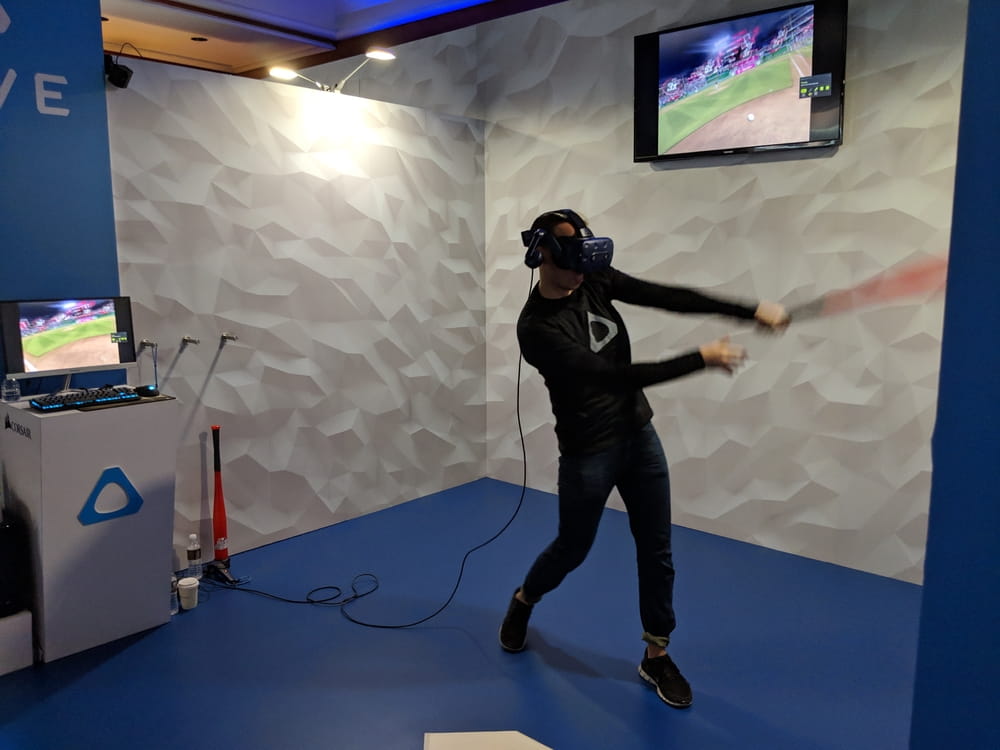
Ten years ago, exit velocity data and spin rate tracking were tools only MLB organizations could afford. Today, a 14-year-old in Dallas can train with the same systems used in professional dugouts.
That’s the beauty of modern technology advancements and is bigger than most people realize. Player development is no longer endless pitching, catching, and hitting drills. Working harder and smarter has become a practice that goes hand-in-hand; technology plays a massive role in creating stars on the field.
At Lone Star Diamond Academy, we’ve built our facility around combining tech with physical prowess. Baseball training technology isn’t a gimmick here. It’s how we help Dallas-area players make real, measurable improvements.
The Old Way vs. The New Way: How Baseball Training Has Evolved
In the past, coaching meant watching, guessing, taking notes, and repeating. An old-school coach would see a pitch go wide and help find a solution based on their experience in the game.
Yes, that coaching still makes a difference, but the human eye can only catch so much.
Modern baseball training technology fills in those gaps. Tools today can capture hundreds of data points on a single pitch or swing. They measure things no coach can see with their eyes alone.
MLB introduced Statcast in 2015, and the numbers it put on the map, such as exit velocity, launch angle, and spin rate, have since worked their way down to the youth level.
Now, high school players in Dallas can have the same analytic systems scouts and big-league coaches rely on. When players learn how to use that information early to their advantage, they are the ones who show up to tryouts with a leg up on the competition.
Rapsodo Baseball Training: What It Is and Why It Matters
Rapsodo isn’t as crazy and technical as it sounds. It uses high-speed cameras and radar to measure what a baseball does the moment it leaves a player’s hand or bat.
For pitchers, Rapsodo tracks:
- Spin rate
- Spin axis
- Velocity
- Release point
- Pitch movement
Together, those analytics explain why a pitch breaks how it does or what makes a successful fastball.
A pitcher who understands their own spin profile can start building their arsenal with intention instead of just throwing and hoping.
For hitters, Rapsodo baseball training measures:
- Exit velocity
- Launch angle
- Ball-flight direction
These numbers tell the story of whether a swing is producing hard contact or soft contact, and where the ball is going when it does.
At LSDA, coaches use Rapsodo data to develop a plan for each player. A kid with a great spin rate on his curveball learns how to use that. A hitter who is consistently hitting weak grounders learns exactly why and starts fixing it with a clear target in mind. This is what data-driven baseball development looks like in practice.
HitTrax Baseball Training
Ready to make batting practice a data-driven exercise? HitTrax takes batting practice and turns it into something you can actually measure. Every swing produces real numbers. Exit velocity, launch angle, estimated distance, and spray chart location are all tracked on contact.
One of the more engaging features is the stadium simulation. This helps break the monotony of cage work and gives their swing some actual weight as they see their ball flight play out in a real MLB stadium on screen.
Engagement is great, but improvement is the goal. You don’t want to feel like you’re improving; you want to improve. This data shows progress and is what makes HitTrax an invaluable piece of tech.
How LSDA Uses Technology to Build Complete Athletes in Dallas
Data by itself doesn’t develop a player. A number on a screen doesn’t fix a swing or sharpen a pitcher’s approach. That’s where coaching joins the team.
At Lone Star Diamond Academy, we don’t make technology the strategy; we use it as a tool to develop our human-driven strategy. Our coaches use technology to explain the why in their needs and show players what to do about it.
Our coaches know the sport. Many have been coaches with collegiate and professional experience. The box is their second home, and the mound is their battleground. They know how to take a Rapsodo or HitTrax report and turn it into a coaching cue a player can actually feel and use.
We use technology to build an individual development plan for young athletes based on their own numbers. As the data changes, the plan changes with it. We treat technology use as an ongoing conversation between the player, coach, and the numbers.
We want to build athletes who can handle the game as a whole. That’s why our player development also includes physical conditioning, mental performance, and baseball IQ. We help build players ready to take on the next level, not just the next season.
Go Beyond the Batting Cage with Lone Star Diamond Academy
Baseball development is no longer a guessing game. The players who thrive at the next level are the ones getting data-backed instruction now, not later. They’re the ones who know their spin rate, understand their launch angle, and have coaches who can put all of it to work.
If you have a player in the Dallas area who is serious about getting better, we’d love to show you what baseball player development in Dallas looks like at LSDA. Schedule a session or reach out to our team to see the technology and the coaching in person.